maandag 30 september 2013

Even the Pope could not let her play again....


For some reason, artists can become “much collected” artists. Remarkable life story, scarcity of records made, a record company more interested in fast bucks rather than taking care of their legacy (hello EMI :-) and voilà, people are willing to pay a small fortune for an original recording of that artist. Especially if it’s someone with a distinctive own voice and performance style. 
“All of the above" cumulate in the Italian violinist Gioconda de Vito.

De Vito, born in 1907, started playing music on the mandolin, but quickly transferred to the violin.
Although she was almost kicked out for being unable to carry a tune in singing (!), she studied at the Pesaro conservatory and the Accademia di Santa Cecilia in Rome.
In 1932 she won the International Violin Competition in Vienna, but did not ambition a big international career. Instead, she became a teacher at the St. Cecilia Conservatory of Bari.
When she finally decided to record some of her repertoire (something she would
be reluctant her whole career, rare-vinyl record dealers bless her for ever about this...!)
she went to London and.... fell in love with David Bicknell, director of HMV division of EMI Records.

They married in 1949 and Gioconda de Vito thus acquired British citizenship.
In 1961, she decided it was enough, and devoted her life to housekeeping.
As a true Catholic, she found this role far more suited for her then her occupation on
the violin. Even a a plea from the Pope (!), for which she had regularly performed,
could not help. Gioconda de Vito died in 1994. Her unique, personal voice shines
through the noise of the 78RPM, which I have put on youtube. Glimpse of the record (and actual transfer of the record) are visible too in this video. Hope you will enjoy it!!


Gioconda de Vito (22nd Jun. 1907 ~ 14th Oct. 1994)
Beethoven:
Romance for violin & orchestra No.2 in F major, op.50
29th May 1948, Abbey Road Studios, London
Philharmonia Orchestra conducted by Alberto Erede.


donderdag 9 mei 2013

Winter has gone...!


Denn siehe, der Winter is vergangen, 
der Regen is weg and dahin, 
die Blumen sind herfürkommen im Land, 
der Lenz ist herbeikommen, 
und die Turteltaube läßt sich hören in
unserm Lande,

See, the winter is past,
the rain is gone and away,
the flowers flourish in the country,
Spring is at hand,
and the turtledoves are heard
in our country,


When I walked, one late evening, in a park near my house, I heard these lines being chanted cheerfully in my headphones… It was a couple of weeks ago and the Netherlands just had faced one of the longest winters in modern history. Smell of grass and blossom filled my nostrils and the sense that this Game-of-Thrones-like winter was gone and that we now had six or seven years of summer ahead, fulfilled me with a sense of joy.  Denn siehe, der Winter is vergangen” was a line from Heinrich Schütz’s two-choired motet “Stehe auf, meine Freundin” that I had acquainted from the Dutch Public radio.
Schütz primarily worked in Dresden, during the time of the Thirty Years War. What is now called Germany was at that time a horrid and apocalyptic place. Large parts of the country were literally depopulated. Estimates assume that about one third of the German population died due to the war conditions and as a consequence Schütz often wrote his pieces for a small ensemble. Musicians were forced to be soldiers and instruments were replaced by weapons… A double choir must have been an incredible luxury at that time... This Schütz motet was performed in 2007 live, by the Dutch Bach Society as part of a 17/18th century vocal music program at the festival of old music in Utrecht, the Netherlands. Hope you will enjoy it as much as I did.!   :-)


Heinrich Schütz (1585-1672)

Georg Böhm (1661-1733)

Dietrich Buxtehude (1637-1707)

Johann Christoph Bach (1642-1702)

Johann Sebastian Bach (1685-1750)

vrijdag 26 april 2013

How Stravinski sounded in... 1916 (!)


Sometimes you can make these remarkable discoveries online…
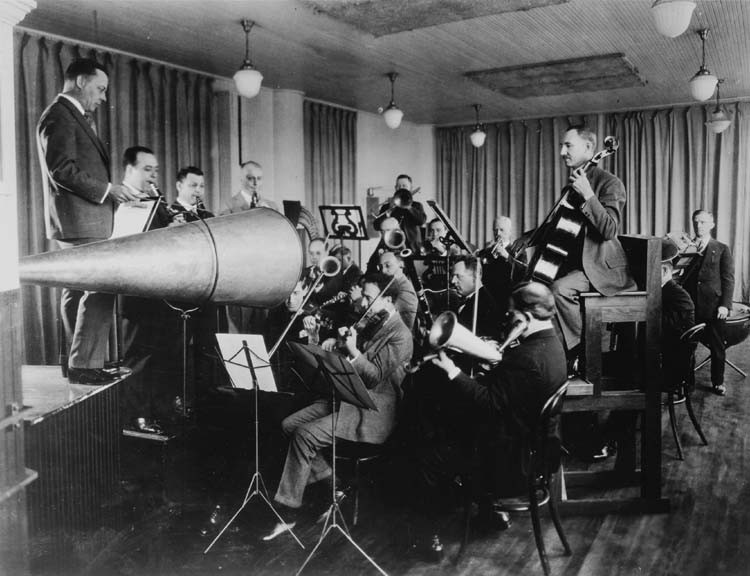
I already knew this record existed, but now finally found a link for it; the 1916 recording of Thomas Beecham, conducting Stravinski’s Firebird.
* You read it right, 1916…  *
Acoustic, no electricity used, only in the performance. Weird, to hear such “modern” music on an acoustic Columbia record.


Wow, was my first thought… :-)


vrijdag 31 augustus 2012

Fuxpuzzle


I did it!! I finally found the music that annoys my surroundings even more than GothicElectro, Dubstep, or Speedcore… :-) Not a bad accomplishment for a 17th century Austrian composer, with a reputation for being a dull academic…! Poor Johann Joseph Fux, ok, the Habsburg Catholic court *might* not have been the gentlest, free-thinking surroundings of that period (ask it to the people who had to endure the 30 year war), but only to be remembered by a book that nobody can read (as it is written in Latin) no, that is too harsh for Johann. So I was glad to find his “Missa Corporis Christi” on youtube, nice flowing music, so easy going that you have to be in a splendid mood to endure it…
The only snag was that the uploader wanted to make a puzzle of the missa order. No clues given… So, here is my solution for this Fuxpuzzle, the right order for this work.
Hope you will enjoy it!


zondag 25 december 2011

Music for the Dead Days


Ok, Christmas night is over… Are you already fed up with the fourth Weihnachtsoratorium you just had to hear this year? The sixth Messiah? Cambridge Choir Chorals until you drop? Do you want to act on the word “Wham” when ”Last Christmas” bugs you for the zillionth time in the mall you visit? Don’t despair! Here is the Christmas music that does not feature any tunes wich crawl in your ears when you actually want to sleep, does not contain any people singing and is actually a very nice composition an sich. Perfect music for what the Dutch writer Natalie Koch so beautifully described as “the dead days between Christmas and New Year”…
It’s the Weihnachtsquintett (Christmas Quartet) from the Dutch Composer Jan Brandts Buys (1868-1933). Scored for Flute and String Quartet and composed in 1915, it perfectly set’s the introvert and reflective mood of the Dead Days, providing a suitable transition between O Holy Night and Auld Lang Syne… Click the link below for the music.
Have a Happy Dead Days!


zondag 27 november 2011

Liszt in a Ladies magazine...


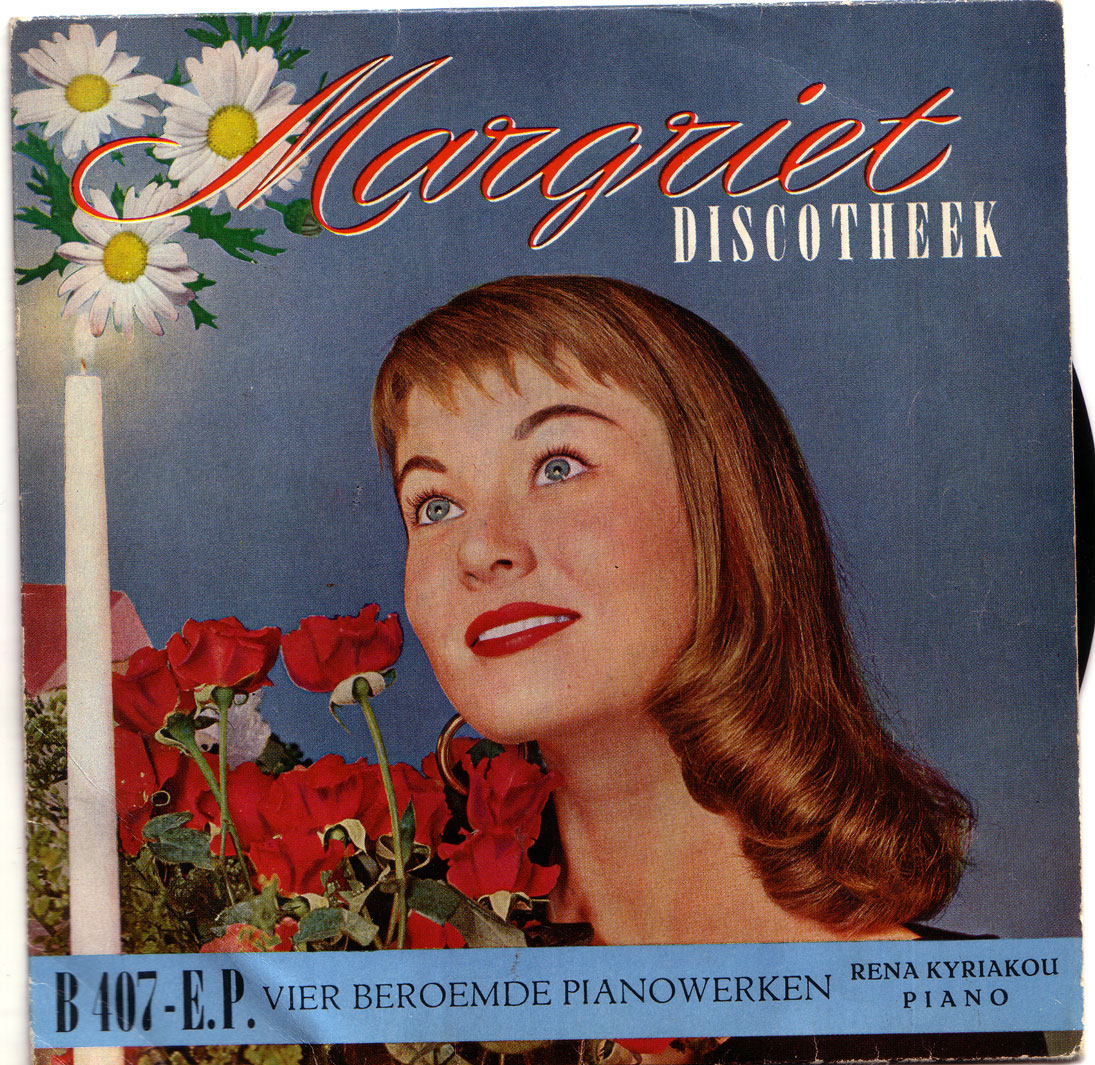
Some records you take just for the cover alone... Like this 45RPM that once was a supplement with the Dutch ladies magazine "Margriet". I have several records on this label, mostly VOX re-issues, but non have that wonderful late 1950's romantic flair on it... What is she staring at? What does she think? Why is that candle there?? Well, in the end, 10 Eurocents well spend... :-) Greek pianist Rena Kyriakou (1917-1994) easily glides through the piano lollipops by Beethoven (für Elise!), Schumann, Liszt and Brahms, can’t go wrong there… Hope you will enjoy this curiosity!


zaterdag 12 november 2011

My all time favorite classical LP: Helene Boschi Plays Mozart

-->
Recently, Dutch classical music station Radio 4 had an “Edison day” to commemorate the 80th anniversary of phonograph inventor Thomas Alva Edison. The broadcast itself was a little disappointing, only a few items had connection with the theme and a collector who wanted to play a two minute wax cylinder on the show was asked to shut down the machine after 30 seconds… It made a rather hilarious part of the broadcast, and hey, show some courage there on Edison day! Anyway, there was an intriguing red wire theme through the broadcast, which was he question “what is your favorite classical LP?” It prompted me to think about it, and all the usual suspects passed by; Glenn Gould’s Goldberg variations, Mravrinski’s Shostakovich or even Bruckner Six by Otto Klemperer… But… The one I came up with in the end was something completely different. It’s Mozart’s 22nd piano concerto, played by the Swiss pianist Helene Boschi (1917-1990). From the moment she steps in the arena (after the introduction with some awesome Czech wind players) you have the feeling that the concerto has to be played like this and not in any other way. It’s played so unbelievably natural and “right”, that from the moment I first put the stylus in the groove of this 1953 LP, I was completely blown away by it. The weird thing is, to my knowledge, it has never been re-issued on cd… Well, judge for yourself, I have transferred the LP (about a quarter inch thick, tha good old Supraphon pressings…) and put the MP3’s online.  Rightmouseclick to download. As a bonus, I added an interview I had with the Dutch Teleac radio program “Hoe? Zo!” about the transfer of this LP. It’s in Dutch, but you hear some examples of the “before” and “after” treatment of the crackles and pops… Enjoy the performance!